
%20(1).png)


.png)
Cost to Refinance a Mortgage: How Much Will You Spend?
I still remember the first time I looked at a refinance quote. I saw the lower interest rate and got excited, but then my eyes hit the "Closing Costs" line, and my jaw dropped.


.png)
Here is the reality: refinancing isn't just about swapping rates. It's an investment. Generally, fees fluctuate wildly, usually landing between 2% and 6% of your loan amount. But honestly, generic online calculators rarely get this right because they don't know your credit score or local tax laws. If you want a solid number without the spam calls, I'd recommend skipping the guesswork and connecting directly with a loan officer on Bluerate to get a real quote for free.
How Much Does it Cost to Refinance a Mortgage?
If you need a "back of the napkin" number to start budgeting, assume you will spend about 3% to 4% of the loan amount.
So, if you are refinancing a mortgage of $200,000, you are likely looking at a bill between $4,000 and $12,000 to close the deal. Why such a big gap? It usually comes down to where you live and the lender you pick.
Here is a quick look at what usually eats up that cash on your Loan Estimate (Page 2):
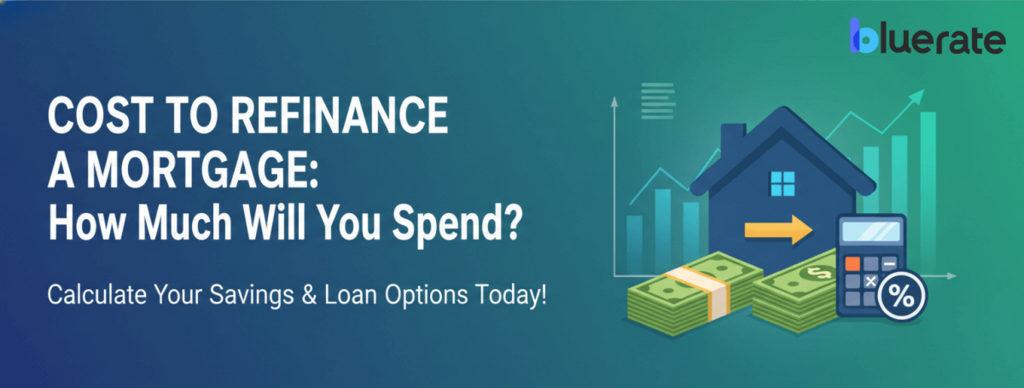
- Origination Fee ($1,000 - $3,000): The lender's cut for doing the work. Usually 0.5% to 1.5%.
- Appraisal ($300 - $600): A third party has to confirm your home is actually worth the money.
- Title Work ($700 - $1,500): Insurance to make sure no one else has a claim on your property.
- Recording Fees ($50 - $250): What the county charges to file the paperwork.
- Credit Report ($30 - $100): The cost to pull your data.
How to Lower the Cost to Refinance?
You don't have to just accept the first number a bank throws at you. Over the years, I've seen savvy borrowers shave thousands off their closing costs just by knowing which levers to pull.
Here are eight specific ways to keep more money in your pocket:
Improve Your Credit
This is the biggest lever you have. A score of 760 or higher puts you in the "VIP" tier for pricing. Even bumping your score up by 20 points by fixing an error on your report can drop your origination fees significantly.
Pay Down Debt
Lenders get nervous when your credit cards are maxed out. Lowering your overall debt improves your Debt-to-Income (DTI) ratio. The less risky you look, the fewer "risk adjustments" (extra fees) you pay.
Shop Around (The Smart Way)
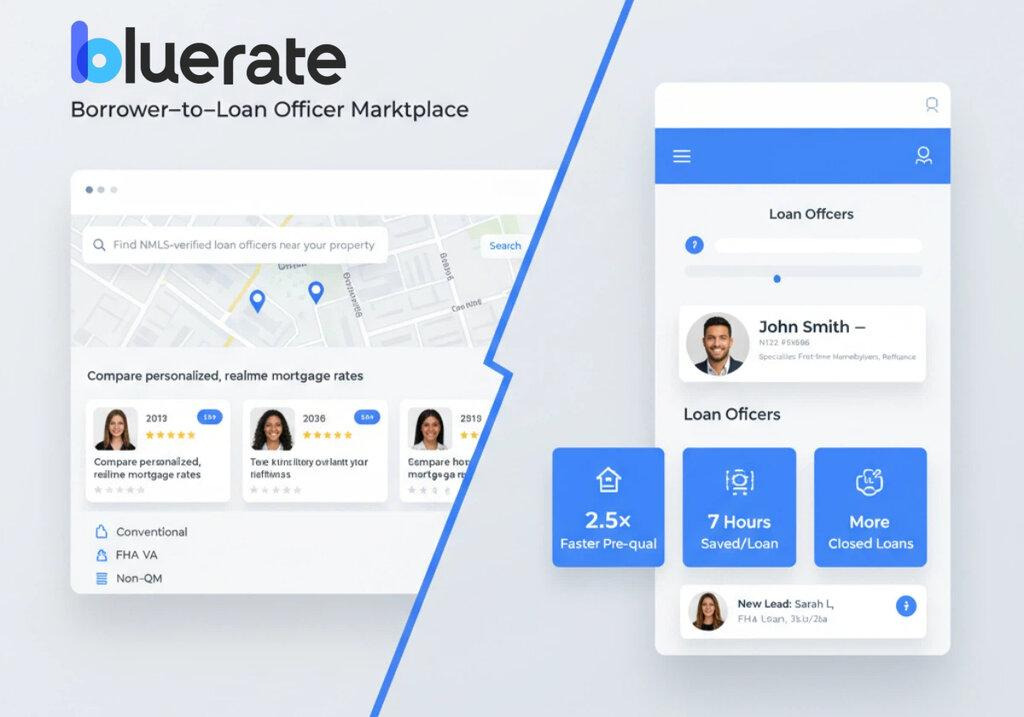
Most people dread this because they don't want their phone blowing up with sales calls. This is where Bluerate is different. Instead of being assigned a random lender, you can browse and pick specific loan officers yourself. It allows you to quickly compare fee structures and find an officer who runs a lean operation, passing the savings on to you.
Borrow Less of Your Home's Value
If you have some cash, try to keep your new loan under 80% of the home's value (LTV). Lenders offer better pricing tiers at 75% or 60% LTV because the loan is safer for them.
Avoid Cash-Out Refinances
If your main goal is saving money, don't tap your equity. "Cash-out" loans always come with higher rates and fees than a standard "Rate-and-Term" refinance.
Consider a Streamline Refinance
If you have an FHA or VA loan, look into a Streamline refinance. These programs are fantastic, they often skip the appraisal entirely and require way less paperwork, which cuts your costs down drastically.
Negotiate Closing Costs
Look at "Section A" on your Loan Estimate. These are the lender's fees, and they are negotiable. Ask them to waive the application fee or reduce the processing fee. The worst they can say is no.
Ask for Fee Waivers
If you stay with your current lender, play the loyalty card. Ask if they have a "client retention" program that waives the origination fee for existing customers.
Can I Refinance a Mortgage with No Closing Costs?
Let's be real: "No Closing Cost" is a marketing term, not magic. The appraiser and title company don't work for free. It just means you aren't writing a check today.
If you want to bring $0 to the closing table, you generally have three options:
- Roll it in: You add the $5,000 in fees to your loan balance. Now you owe more, and you're paying interest on those fees for 30 years.
- Higher Interest Rate: The lender gives you "credits" to cover the bill, but in exchange, you take a rate of 6.5% instead of 6.0%. This saves cash now but costs more monthly.
- No Lender Costs: Sometimes a lender will waive their specific fees as a promo, but you still have to pay the third-party taxes and title fees.
Calculate your "break-even." If you plan to move in two years, taking the higher rate to avoid upfront costs might actually be the smarter math.
FAQs About Cost to Refinance Mortgage
Q1. What are the fees when refinancing?
It's a mix of three things: Lender Fees (origination, admin), Third-Party Fees (appraisal, title, credit checks), and Government Fees (recording taxes). All in, this usually totals 2-6% of the loan.
Q2. What is the 80/20 rule in refinancing?
This refers to equity. If you have 20% equity (meaning your loan is 80% of the home's value), you typically don't have to pay Private Mortgage Insurance (PMI). Refinancing to get rid of PMI is a huge money saver.
Q3. What disqualifies you from refinancing?
The big deal-breakers are a low credit score (usually under 620), too much debt (DTI over 43-50%), or being "underwater" (owing more than the house is worth). Also, recent job changes can sometimes complicate things.
Q4. When is it worth it to refinance?
Run the break-even math. If closing costs are $4,000 and you save $200 a month, it takes 20 months to break even. If you plan to stay in the house longer than that, it's worth it.
Conclusion
So, is refinancing worth the price tag? In my experience, if the math works, absolutely. While paying 2-6% upfront stings, dropping your rate by a full percent can save you tens of thousands over the life of the loan.
But please, don't rely on ballpark guesses. Your credit profile and zip code change everything. Go to Bluerate, find a top-rated loan officer, and ask for a detailed Loan Estimate. It's the only way to see exactly what you'll spend, and exactly how much you'll save.


.jpg)
%20(3).png)